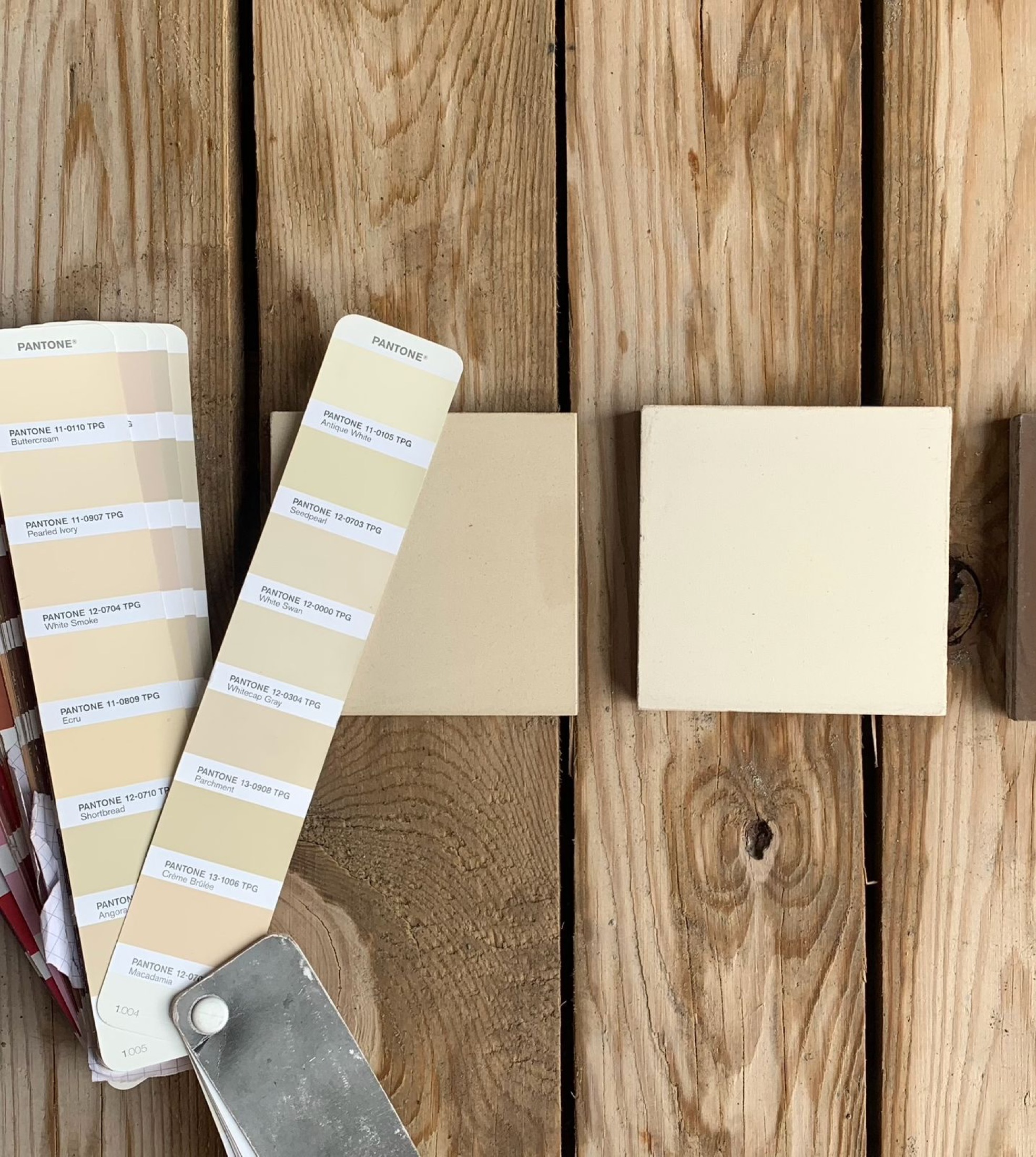
Pigment mix
Mineral pigments measured and mixed with white cement, marble dust, and fine sand. Each colorway has a recipe sheet — followed to the gram, every batch.
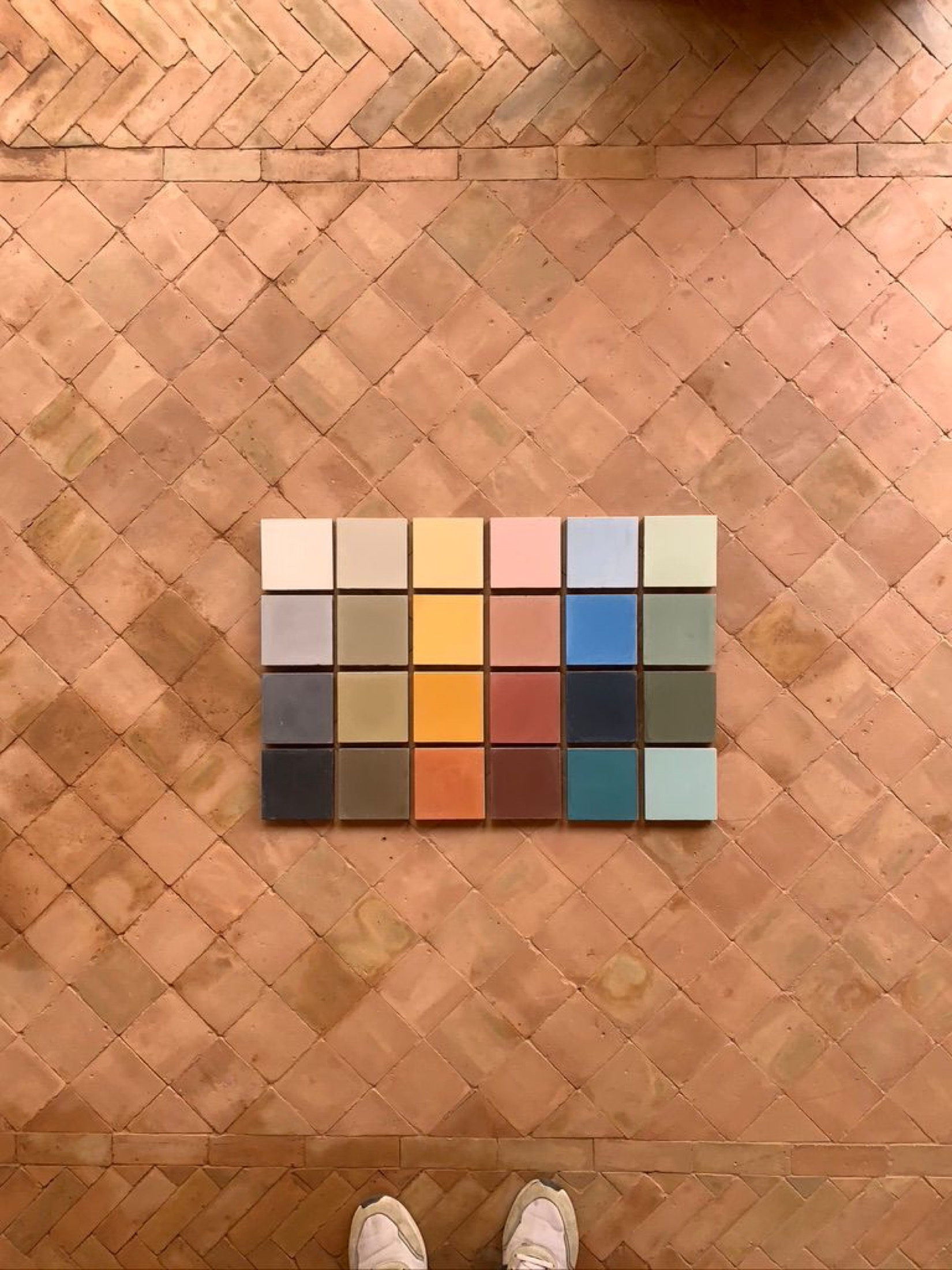
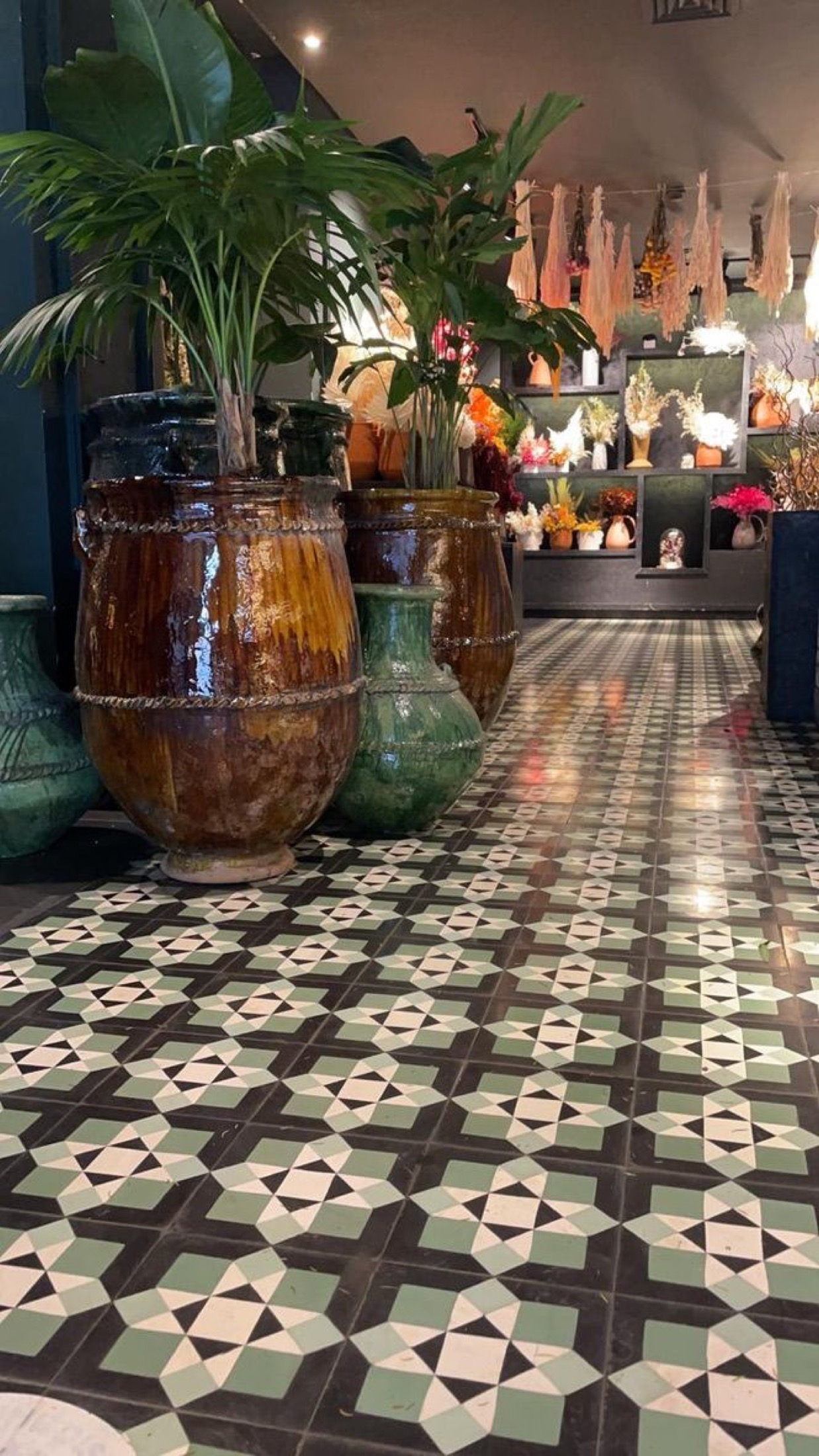
Hand-pressed pigmented cement tiles — thirty patterns, a 24-color mineral palette, and custom colorways as a matter of routine.
The patterns30 patterns
The palette24 colors
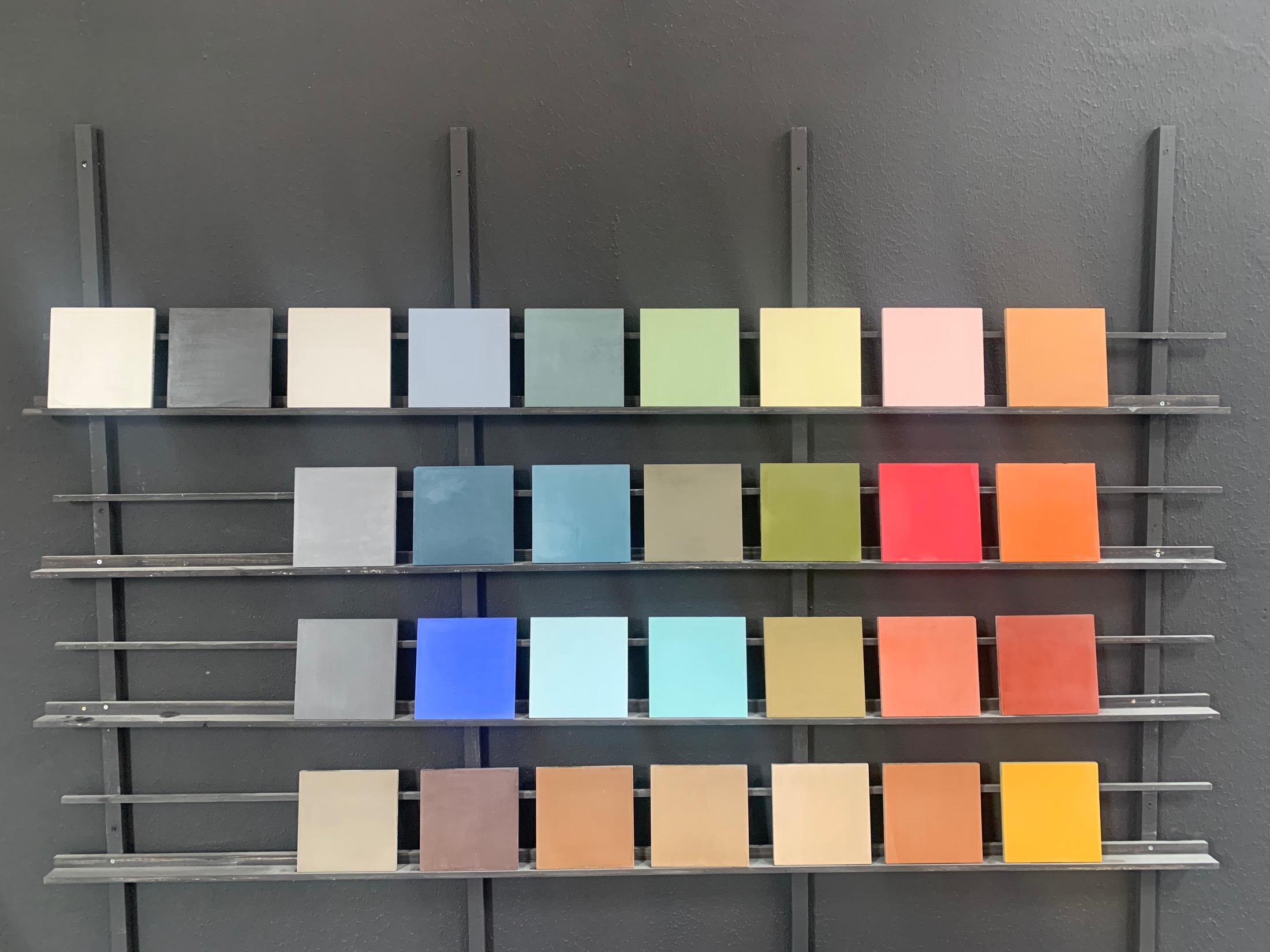
Want a custom colorway from these 24? Tell us your combination
Specification
Samples
Up to 12 tile samples, shipped to your studio. Tell us the patterns and colorways you’re considering and we’ll confirm the cost and timing.
The maker
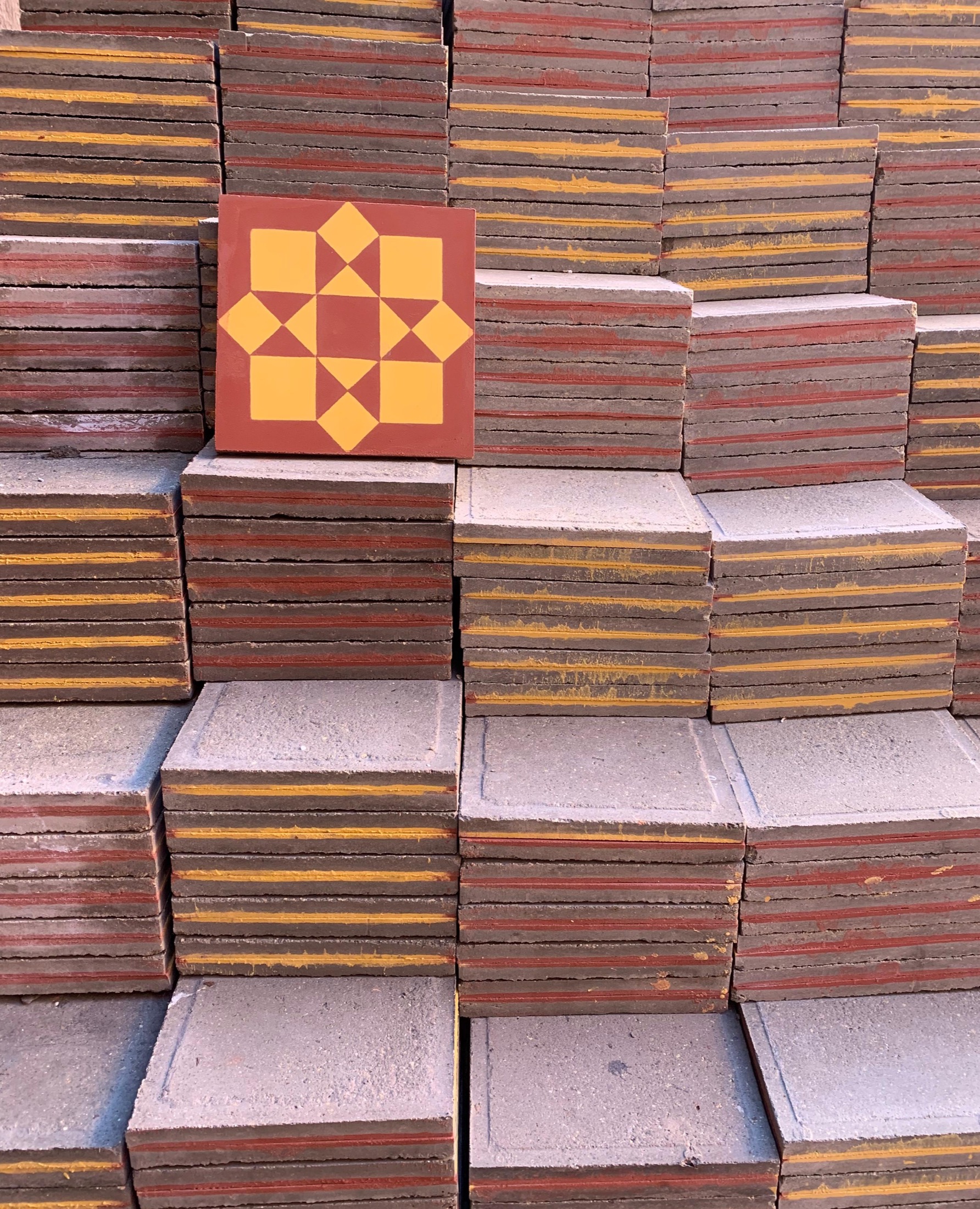
Zeljora has been hand-pressing cement tiles in the same Casablanca workshop since 1972 — three generations on the same hydraulic presses, with the same pigment supplier on the outskirts of Fez. The workshop has 41 makers on staff. Every tile is pressed, demolded, water-cured, and air-dried by hand; nothing is automated.
The catalog runs to thirty patterns, named after African and Latin American cities, and a 24-color palette of natural mineral pigments. Custom colorways inside that palette are routine — about 60% of orders are custom. Custom patterns and tile dimensions are available on a 25 m² minimum.
"We do not press a tile a customer has not signed off on. The work belongs to whoever specified it before it leaves the workshop."
— Salim Essami, founder
The process04 steps
Mineral pigments measured and mixed with white cement, marble dust, and fine sand. Each colorway has a recipe sheet — followed to the gram, every batch.
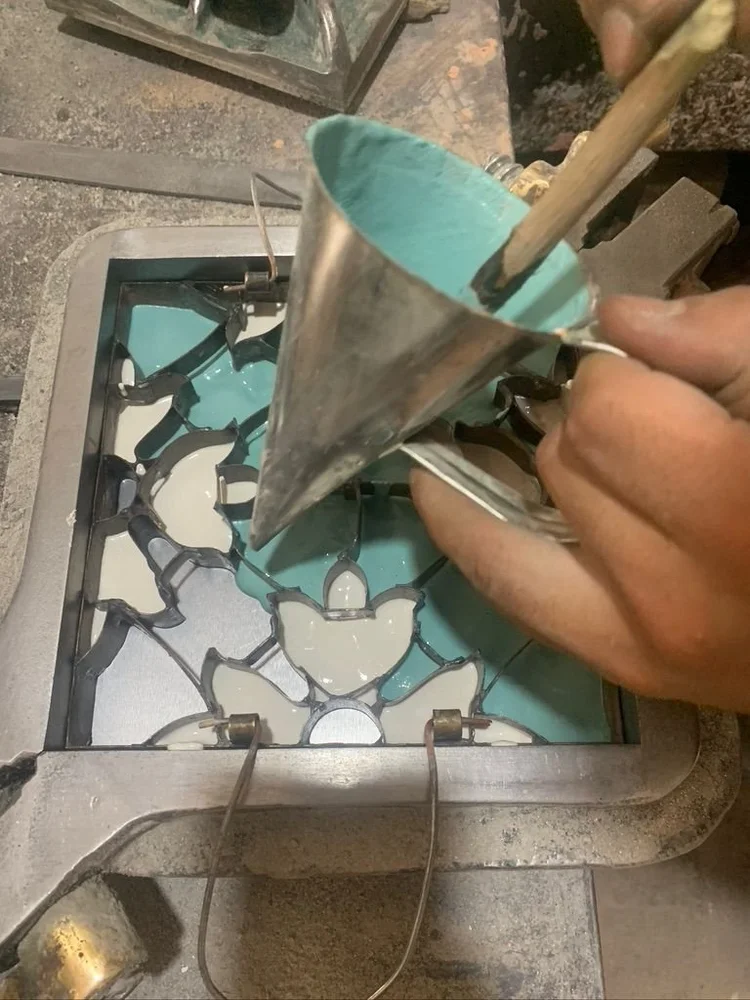
A copper divider — the trépied — is set into the iron mold and the pigmented cement layered in by colorway. A 3-ton hydraulic press compresses each tile in a single stroke.
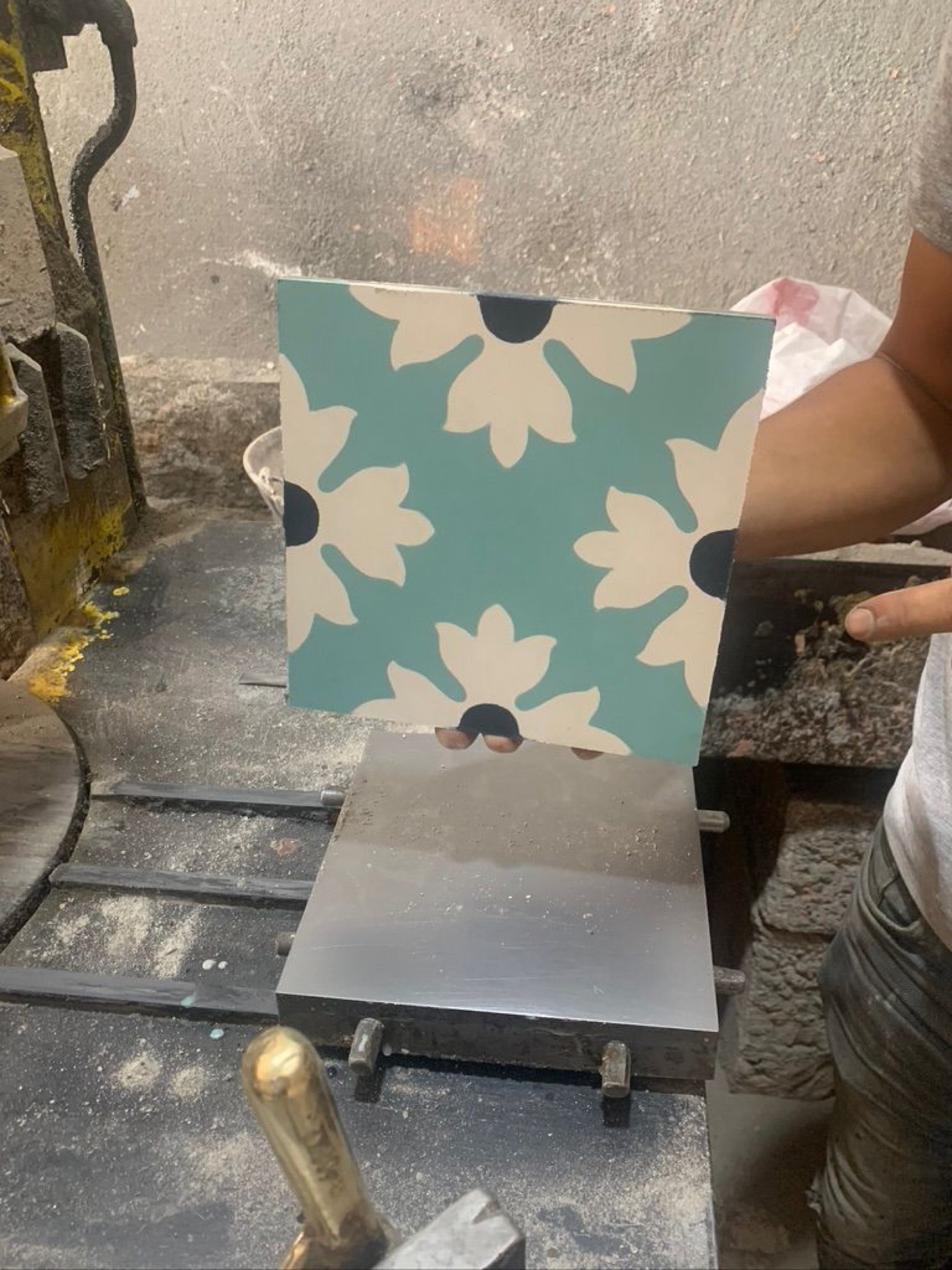
Tiles soak in water for 24 hours to hydrate the cement, then air-dry on racks for 28 days. No kiln, no shortcut. The colors deepen and lock during this stage.
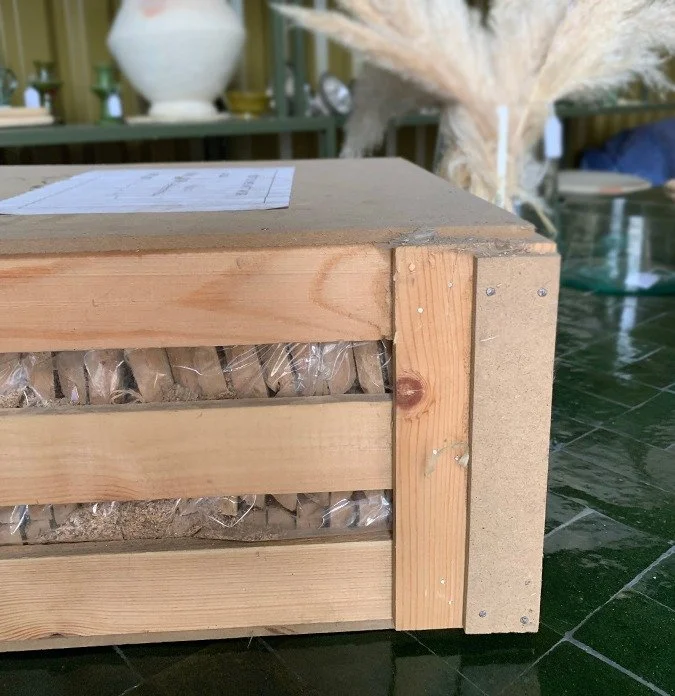
Each tile is hand-inspected, edge-sorted, and crated in straw and wood. Bilad arranges ocean freight from Casablanca; transit to US East Coast averages 4–6 weeks.
Zeljora in projects03